Storms do not throw NRG off course

In short
The NRG contractor consortium, consisting of Van Vulpen, Alsema and Denys, is constructing 220 kV and 380 kV high-voltage connections for TenneT, starting at the beach near Wijk aan Zee. The connections run via the newly constructed Wijk aan Zee-Beverwijk transformer station to the existing 380 kV substation in Beverwijk. This will connect two new offshore wind farms off the Dutch coast -Hollandse Kust (north) and Hollandse Kust (west Alpha) – to the high-voltage grid.
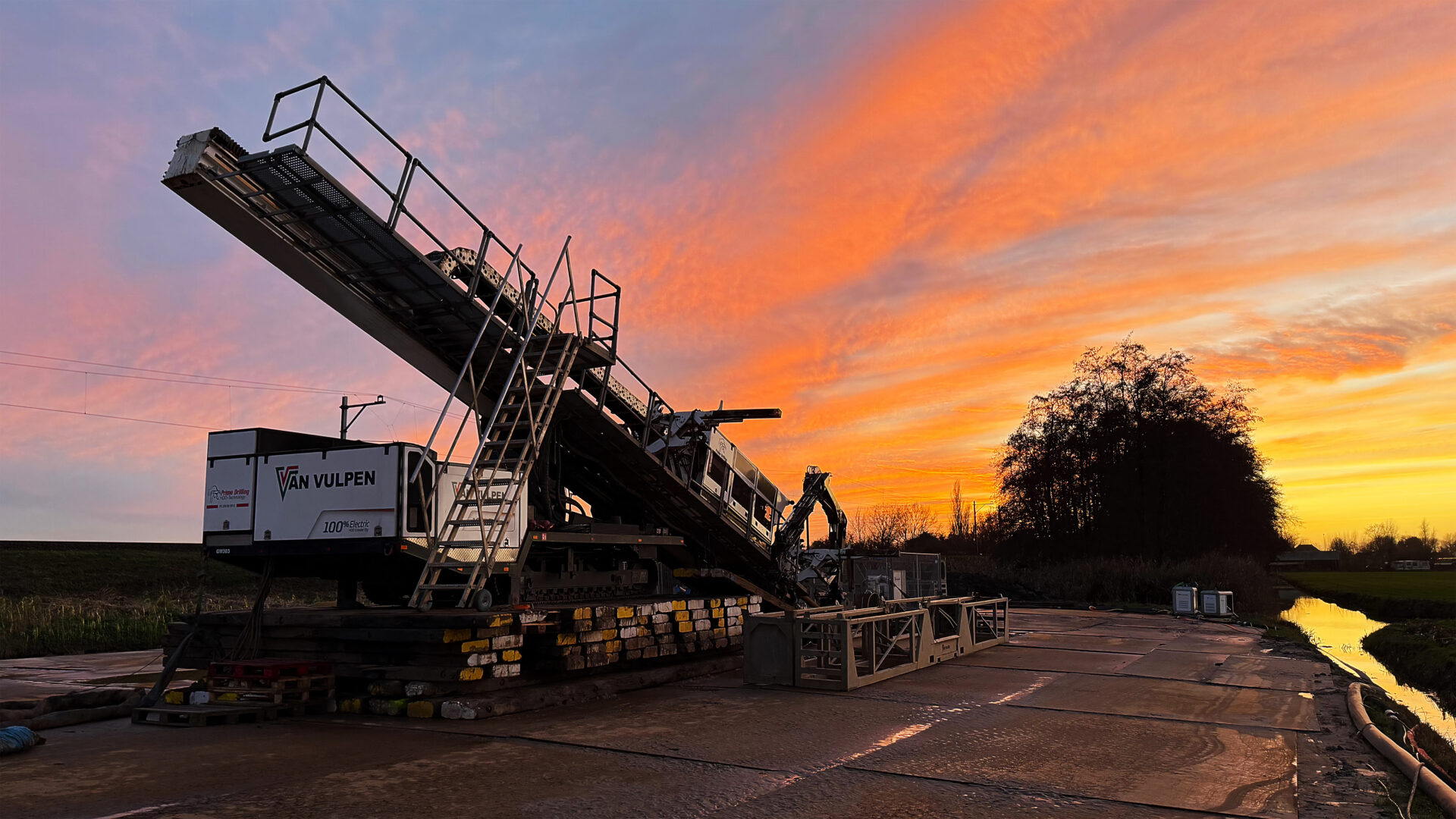
The onshore cable installation consists of nine consecutive HDD drillings, of which number seven was recently completed. “It’s an exceptional route,” says Project Manager Mark, “because the drillings reach depths of 30 to 40 metres and pass beneath the primary flood defence, the A22 motorway, a railway tunnel and the North Sea Canal side channel A.”
Three storms
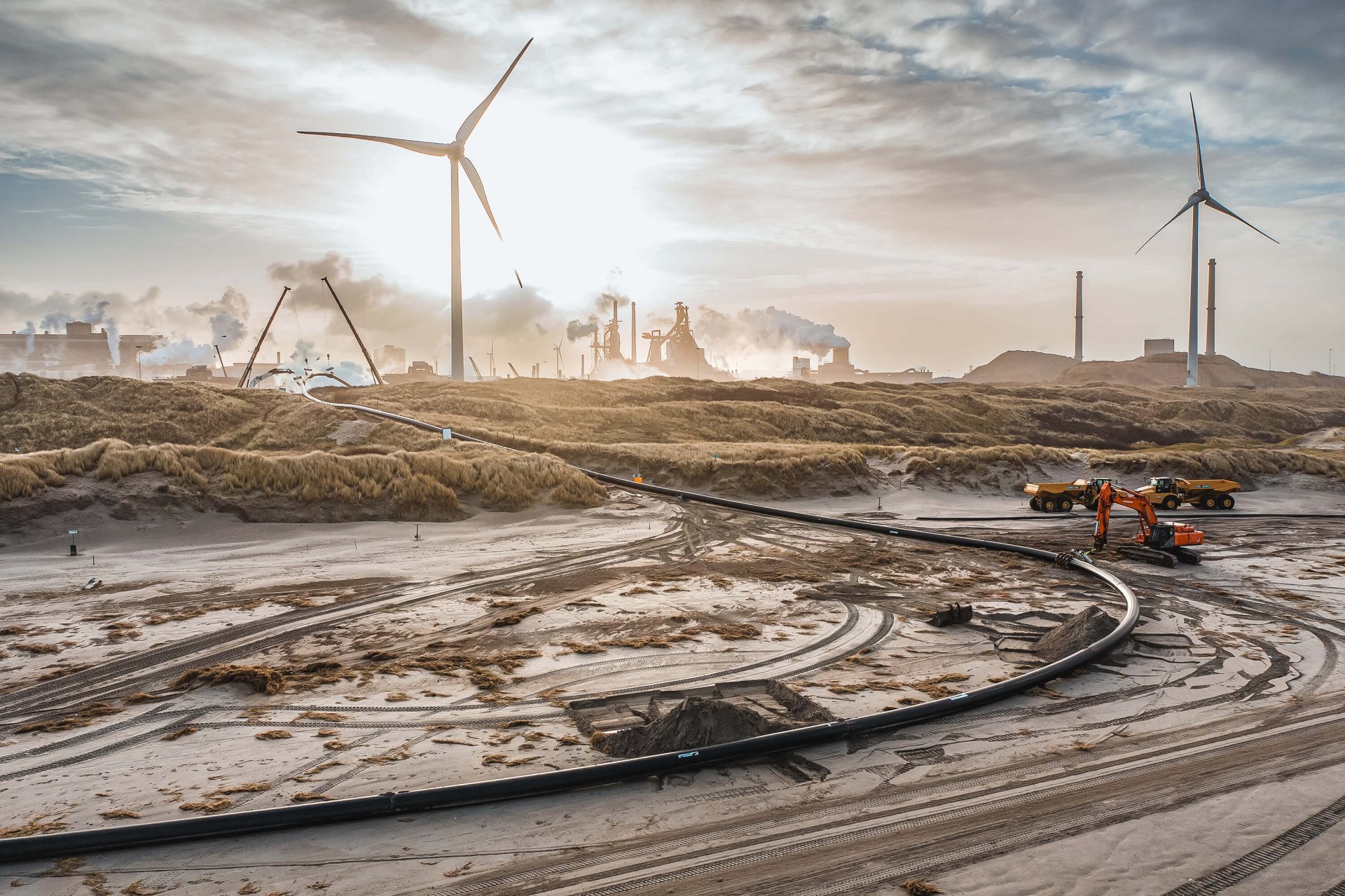
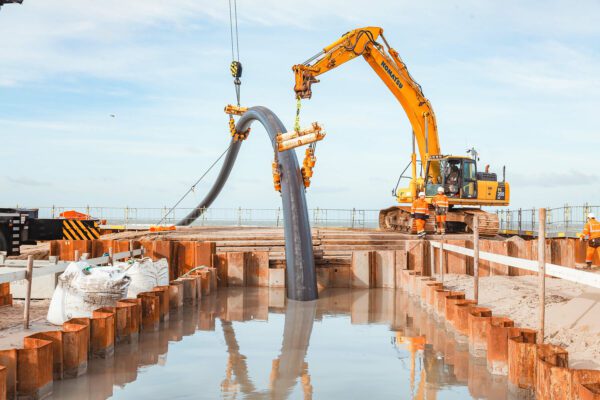
Mark considers the beach drilling the most interesting part. “Despite three storms, the HDD drillings were completed two weeks ahead of schedule. A top performance by the HDD colleagues and the civil engineering team! Only the temporary support structure took a severe beating. The four dune drillings were completed successfully in a single attempt. That is impressive, because the fine sand creates a high risk of collapse. There are also pockets of fresh water in the dunes, which place significant pressure on the bore tunnel. We solved this by applying counterpressure with the drilling fluid.”
Drilling in the dunes requires continuous monitoring and anticipation of changing conditions. “Manoeuvring must be done with great precision, based on data from our own drilling process, measurements or visual observation. The fact that this is challenging is also evident from the limited number of companies bidding for projects like this. Not everyone is willing to take it on.”
Public beach
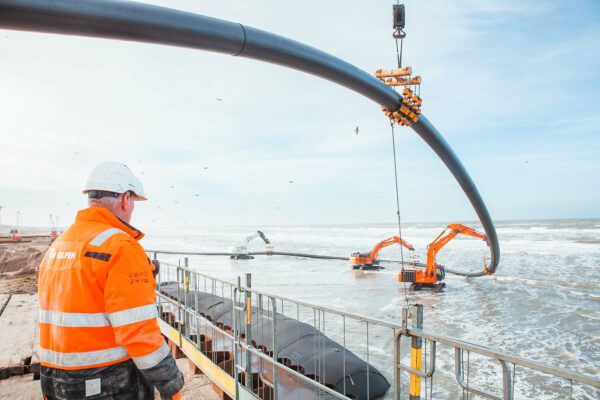
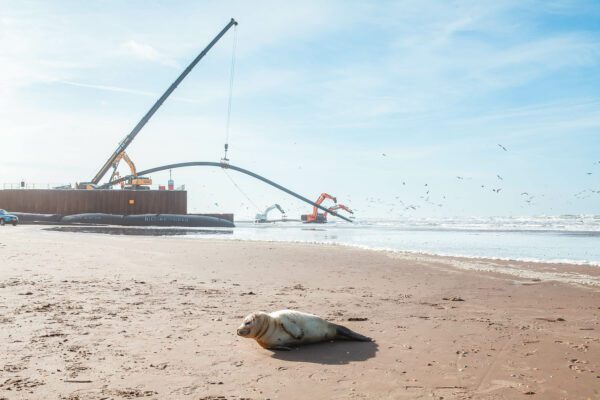
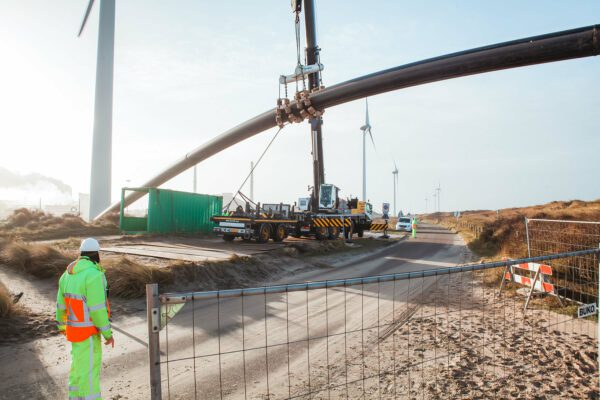
In addition to the stormy weather, the public nature of the beach also presents a challenge. “We drive and work on the beach, where we encounter many different users: walkers, paragliders, mountain bikers and blow-kart riders. The lifeguard service must also be able to respond to emergencies. A team of around fifteen traffic marshals ensured that everything ran smoothly. During drilling, we had four one-kilometre-long pipe strings laid out on the beach at the same time, which also required additional security.”
Restricted area
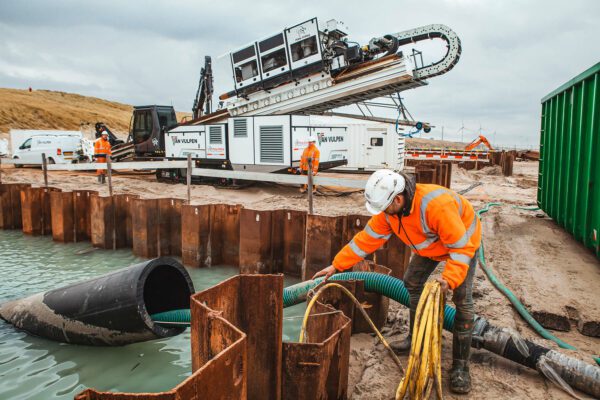
The penultimate drilling operation on the project was 1,100 metres long. “This too had to be carried out with precision, because the entry and exit points were located in a confined area with limited space. We therefore used the ‘meet-in-the-middle’ method, with two drilling rigs drilling towards each other. Here too, we remained on schedule.”
NRG also carried out a section of open excavation for the connection to the existing 380 kV substation in Beverwijk. “Several high-voltage pylons stand near the route. Because the working height is limited, we’re not permitted to enter a certain corridor when driving the sheet piles.”
Additional connection
As this is a UAV-GC 2005 contract, responsibility for coordination lies with the executing parties. “That’s why we hold weekly coordination meetings with all contractors. This runs smoothly, because everyone is willing to adapt.”
NRG recently received an assignment from TenneT to provide an additional, fourth connection. “We pulled a cable through an existing duct, as we were already working there anyway. Because we demonstrated extensive knowledge and expertise throughout the project, TenneT had the confidence to award us this connection as additional work.”
Horizontal Directional Drilling